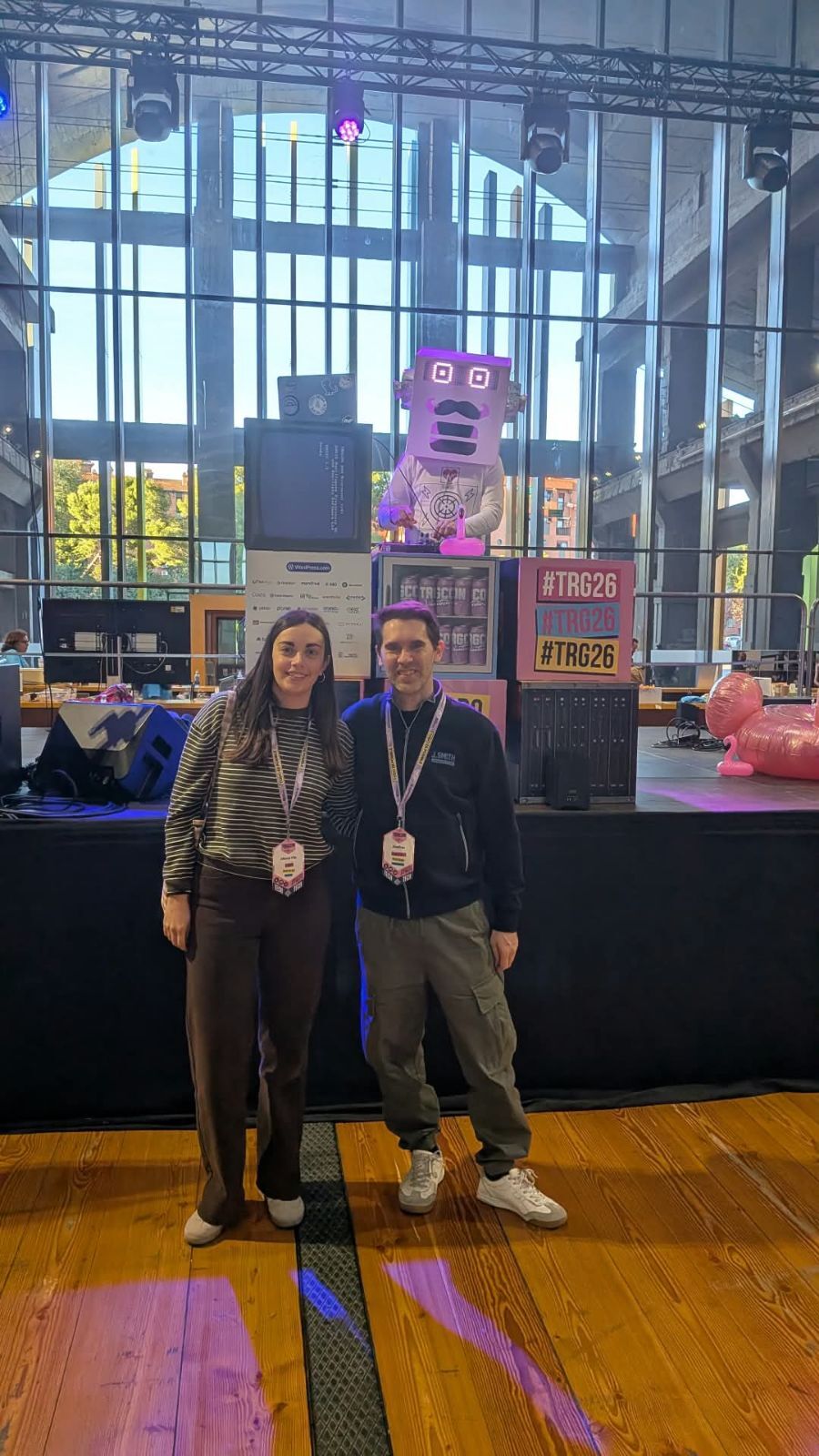
TRG (historically known as Tarugoconf or TRGCON) is recognised as one of Spain’s leading events in the fields of technology, design, software development and digital business. This annual conference, which emerged from the community created by David Bonilla (author of the newsletter La Bonilista), brings together numerous specialists from the tech industry. Its distinctive feature is its friendly, informal and humorous approach, which sets it apart from conventional corporate events by placing a strong emphasis on personal connections and networking.
From 22 to 24 October, inLab FIB team attended the latest edition, held at La Nave in Madrid. This year’s central theme was Artificial Intelligence, with the aim of exploring the impact and transformations AI is bringing to our working environment.
The event was structured around three days:
- Day one (Practical workshops and networking): Several working sessions were organised. We took part in the workshop Scalable and Maintainable Websites in the Age of AI (hosted by WordPress), where the WordPress team introduced its new tool, WordPress Studio, designed to make web application development more agile by harnessing the power of AI and AI agents. In addition, after the workshops, a networking challenge was organised for conference attendees, providing an opportunity to meet the companies supporting the event.
- Day two (Talks): This was the main day of the event, featuring a series of particularly interesting talks. The sessions explored AI from a range of different yet complementary perspectives, examining the profound changes it is bringing about.
A summary of the talks:
- The Programmer’s Odyssey (Andrés Torrubia): An inspiring reflection on the changing paradigm of software development, built around the four Cs (Catapult, Change, Judgement and Courage), concluding with a reflection on the motivation to make society better.
- Burning Tokens Without Burning Your Company (Cristian Córdoba): An analysis of the key questions organisations should consider when assessing costs and requirements before deploying their own AI inference infrastructure instead of relying on commercial providers. The talk also highlighted the distinction between open models and open-source models.
- Killing SaaS Is Easy; What Comes Next Is the Hard Part (José Ramón Pérez): A reflection on how AI is making software development cheaper, potentially allowing organisations to replace externally purchased SaaS solutions with internally developed services. However, costs and scalability must be carefully assessed, while maintaining control over the core of the business.
- How Those Who Build AI Actually Code (Mai Giménez): The talk highlighted the importance of providing clear briefs when working with agents and critically reviewing AI-generated code, recognising that new development teams need to be—and already are—AI-native.
- Design in the Post-ChatGPT Era (Nuria Mediavilla): An explanation of how the workflow between engineering and design is changing, with functional prototypes now being created first using AI to reduce time-to-market. The talk emphasised that human judgement and designers’ creativity remain irreplaceable.
- It Was the AI, Your Honour (Ari Font): A warning about the unavoidable legal and ethical responsibility organisations bear for the errors, biases and actions of their AI agents. Responsibility does not lie with AI itself, but with the people and organisations using these tools.
- Everything Looks Black to Me (Juanjo Montiel): A personal and inspiring perspective on how AI can improve everyday accessibility for people with visual impairments, alongside reflections on privacy and the lack of accessibility in many resources.
- Day three (Open Space): The final morning was dedicated to an open discussion focusing on the opportunities and questions AI raises in everyday professional life. We proposed a discussion on the development and learning of junior professionals, a topic that attracted considerable attention and generated strong interest among attendees.
We are very grateful for this enriching experience, which allowed us to connect with other professionals in the industry and exchange different perspectives on AI and its implementation within their respective companies. Ultimately, in the current context, characterised by the sheer volume of information, noise, expectations and uncertainty surrounding artificial intelligence, the conference provided a valuable opportunity to take a step back and gain perspective, helping us distinguish what really matters when deciding how and when to integrate AI both at inLab and into our professional and personal lives.<br/>